
Report · September 2026 · free to read
Applications, platforms, models, data centers, chips, laws: what exists in Vietnam, and what is Vietnamese, in the world of artificial intelligence. One map, six layers, 40 players.
Intro and map of the ecosystem
One question pushed me to do this work: in Vietnamese AI, what is actually Vietnamese? The models, the machines, the chips, the laws? This report is my answer, in the form of a tour. I am not trying to prove anything. I share what I see from Đà Nẵng, with the sources so you can go further yourself.
The video above is the companion to this article: the same ecosystem, walked through out loud with our analysis, on the Scale in Peace YouTube channel. It is in French, with English subtitles.
A word on vocabulary. You read “sovereign AI” everywhere: that is the word used by NVIDIA and its Vietnamese partners, Viettel and FPT. On the State side, the words are “tự chủ”, self-reliance, and “chủ quyền số”, digital sovereignty, whose three pillars are data, infrastructure and AI technology. That is the thread I follow.
The Vietnamese AI stack
From the use case down to the foundation, each layer runs on the one below.
2030 target: AI economy at 6% of GDP, $5 billion of exports (2026 AI strategy)
 Kiki · Zalo, VNG
 VNeID assistant · CMC, Public Security
 Anti-fraud · MoMo
 eKYC · VNPT
 Callbot · Viettel
 ViVi · VinBigdata
2030 target: 10 Vietnamese AI brands
 FleziPT · FPT Software
 GreenNode · VNG
 VinBase 2.0 · VinBigdata
 VNPT AI · VNPT
2030 target: 8 Vietnamese-language models; strategic product No. 1 (decision 21/2026)
 MISA-AI · MISA, Qwen base
 PhoGPT · VinAI, Qualcomm
2030 target: 560 exaflops, 500 MW (2026 AI strategy)
 AI Factory VN + Japan · FPT, NVIDIA
 National center No. 1 · Public Security
 Hòa Lạc 2 · Viettel
Tân Phú Trung 140 MW · Viettel
An Khánh 60 MW · Viettel
Hòa Lạc 2 · Viettel
Tân Phú Trung 140 MW · Viettel
An Khánh 60 MW · Viettel
 STT VNG 2 · VNG, ST Telemedia
 Hyperscale DC · CMC, Samsung C&T
 G42 consortium · G42, FPT, Viet Thai
 SGI-HCM · Kinh Bắc, AIC
Data Gen Đà Nẵng · Create Capital, Haimaker
SGI-HCM · Kinh Bắc, AIC
Data Gen Đà Nẵng · Create Capital, Haimaker
 R&D center · NVIDIA
2030 target: 1 fab, 100 design firms, 10 test plants, 50,000 engineers, $25 billion (decision 1018)
32 nm fab · Viettel, pilot 2027
FPT Semiconductor · FPT
Bắc Ninh test plant · FPT, 2027
 Prototyping center · Science and Technology
 Innovation center · Finance
Present in Vietnam but foreign, off the map: Intel, Amkor, Samsung, Hana Micron.
The foundation shared by every layer.
- 21 Sept 2024Decision 1018/QĐ-TTgSemiconductor strategy 2030-2050
- 22 Dec 2024Resolution 57-NQ/TWBreakthrough in science, technology, innovation and digital
- 1 Jan 2026Law 91/2025/QH15Personal data protection · decrees 356/2025 and 330/2026
- 1 Mar 2026Law 134/2025/QH15Artificial intelligence · decree 142/2026, decision 33/2026
- 1 Apr 2026Law 131/2025/QH15Intellectual property · decree 134/2026
- 11 May 2026Decision 826/QĐ-TTgAI assistants in public services
- 1 Jul 2026Decision 21/2026/QĐ-TTgStrategic technologies
- 28 Aug 2026National AI strategy2030, vision 2045
Scale in Peace
1. FPT

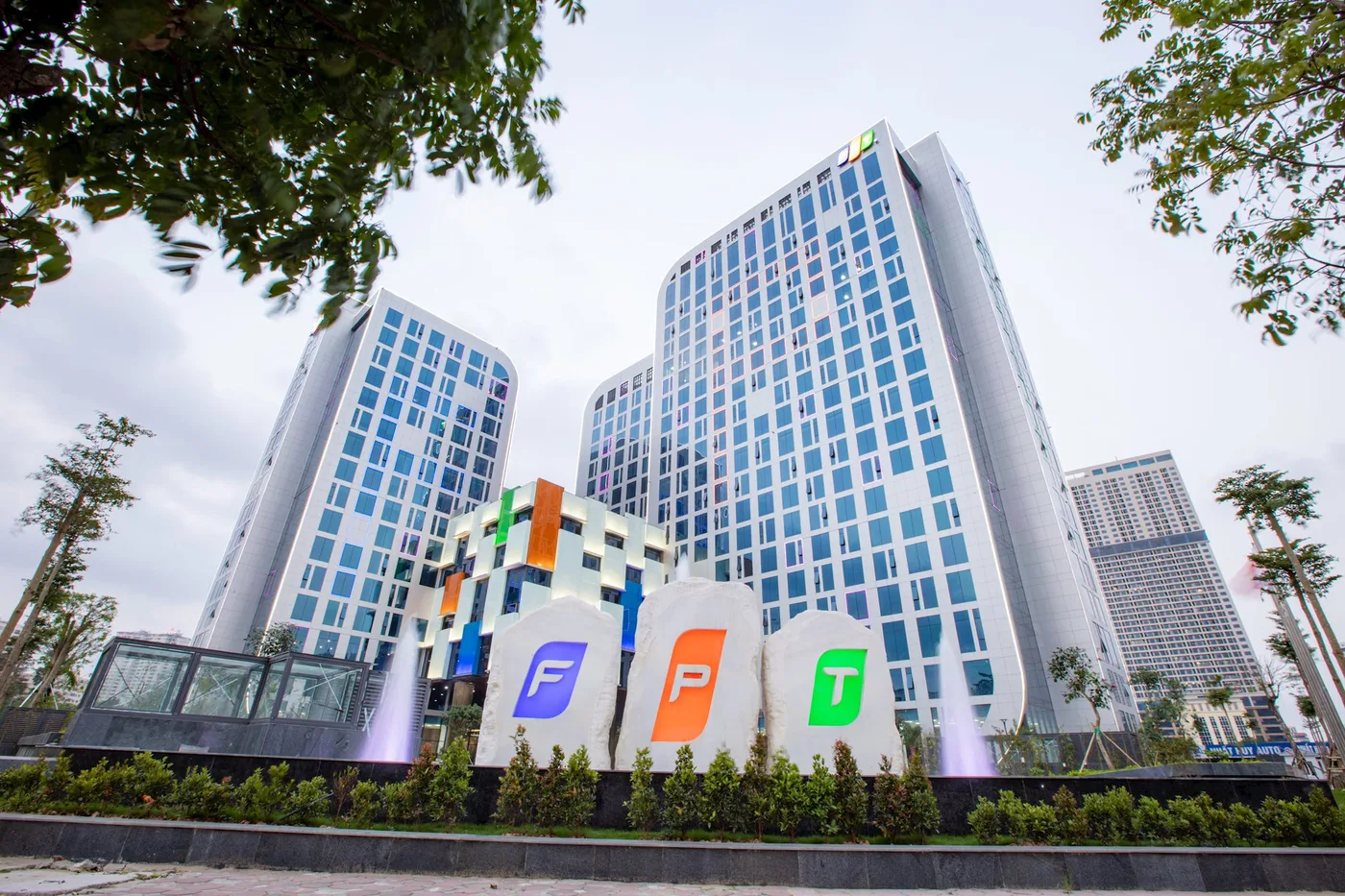
FPT (Công ty Cổ phần FPT) is Vietnam’s largest private IT group, founded in 1988 as a “food technology company”, Công ty Công nghệ Thực phẩm, whose initials stuck. Listed in Ho Chi Minh City, a little over 54,000 employees at the end of 2025. Three of its companies come up in this report: FPT Software, the services arm that writes code for clients in Japan, the United States and Europe; FPT Smart Cloud, which runs the cloud, the AI factory and the AI products; FPT Semiconductor, created in 2022. It is the only group present at every layer, from agents down to chips, and the most talked about in the whole ecosystem.
FPT AI Agents
Launched in November 2024 by FPT Smart Cloud, FPT AI Agents lets you build “digital employees” without writing code: a basic agent in ten minutes, 120 business tasks covered, four languages. In early 2026, FPT reported more than 1,500 agents deployed, said to automate 46% of customer service work. Those figures come from FPT. The underlying model is not named.
The figures come from FPT; here is the product page and an article that picks them up:
- FPT AI Hub, product page: “FPT AI Agents, the AI workforce management platform” (in Vietnamese, use Google Translate)
- VietnamBiz, 26 February 2026: “FPT cuts headcount after years of hot growth: what will tens of thousands of existing engineers do when AI writes cheap code?” (in Vietnamese, use Google Translate)
FPT AI Studio and AI Inference

These are the two software floors of FPT’s AI factory, sitting on graphics cards rented by the hour. AI Studio is for training and fine-tuning a model, AI Inference for running it for users. The catalog offers the big open models of the moment: Meta’s Llama, Alibaba’s Qwen, Google’s Gemma, DeepSeek, Mistral. FPT’s published 2025 results: 1.1 trillion tokens processed, more than 70 models fine-tuned, 18,000 users, around twenty startups.
FPT’s published 2025 results and the model catalog are here:
- FPT Smart Cloud, 24 December 2025: “FPT AI Factory in review 2025: taking the lead in AI innovation” (in English)
- FPT AI Studio documentation: “How to use the model catalog” (in English)
FleziPT, Flezi Foundry and CodeVista
These are the tools FPT Software puts in the hands of its own developers. FleziPT, launched in August 2025, is its “AI-first” framework: methods, 12,000 engineers trained in AI out of 30,000, and a target of 50,000 AI specialists by 2030. Flezi Foundry, added in May 2026, puts AI agents into software development and IT operations, under human supervision. The oldest of the family, CodeVista, has been the internal coding assistant since 2023; it runs on GPT-4, Gemini and Llama. Every productivity figure (up to 60% faster development, 30% gains) is FPT’s own.
To dig into FleziPT and its numbers, including in the group’s internal paper:
- FPT Software, 13 August 2025: “FPT launches AI-first platform FleziPT to accelerate enterprise transformation” (in English)
- Chúng Ta, FPT’s internal paper, 23 May 2026: “FPT’s AI platform launches, up to 30% more productivity” (in Vietnamese, use Google Translate)
- Chúng Ta, 19 March 2024: “CodeVista, the personal AI assistant of FPT developers” (in Vietnamese, use Google Translate)
The 70B model

On 25 December 2025, in front of the General Secretary of the Party, FPT chairman Trương Gia Bình announced a Vietnamese model with 70 billion parameters, trained on 112 billion tokens, with “around 5 million regular users”. The model has no public name and does not appear on the VMLU leaderboard. At 112 billion tokens, it is most likely a fine-tuned open model rather than a from-scratch training run; FPT does not say. The commitment made for 2026: 100 billion uses, an assistant for 100,000 civil servants, and a health assistant for 10 million citizens through the group’s pharmacy chain.
The 25 December announcement and how the press picked it up:
- VnEconomy, 25 December 2025: “FPT chairman: FPT’s Vietnamese large language model now has around 5 million regular users” (in Vietnamese, use Google Translate)
- Công an Nhân dân, 3 January 2026: “What are the giants of Vietnamese tech promising for 2026?” (in Vietnamese, use Google Translate)
FPT AI Factory
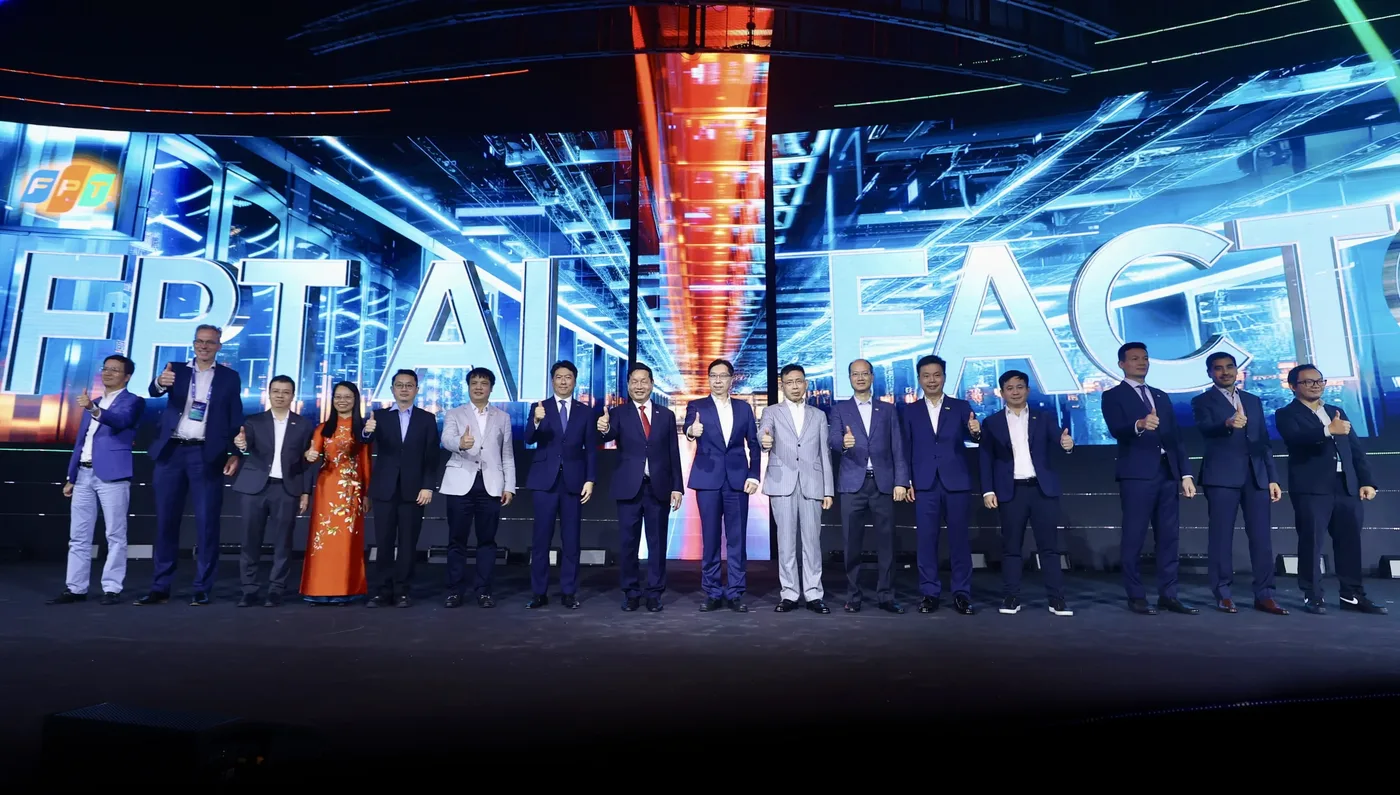
This is the most talked-about project in the whole ecosystem, in short. April 2024: FPT announces $200 million for an AI factory with NVIDIA, then as much again for a second one in Japan, with financial group SBI Holdings taking a stake in the Japanese subsidiary. December 2024: thousands of H100 cards land in Hanoi. January 2025: it opens. June 2025: both machines enter the global TOP500 supercomputer ranking, 36th and 38th; a year later they are 50th and 53rd, the rest of the world installing faster. The $40 million rental target for 2025 is missed, and the financial press talks about a “black hole” in February 2026. Then, in July 2026, FPT announces both factories above 90% occupancy and profitable in the second quarter. Actual revenue: a little over $12 million in the first half of 2026, with $25 to $30 million expected for the year. Clients named: Home Credit, the group’s own Long Châu pharmacies, Hanoi’s E Hospital, and California startup LandingAI.
This is the best-documented project in the report, so here are all my sources, from the “black hole” to the July results:
- CafeF, 20 July 2026: “One year on, where do FPT’s two AI factories in Vietnam and Japan stand?” (in Vietnamese, use Google Translate)
- 24hMoney, 24 February 2026: “AI, the ‘black hole’ sucking in FPT’s capital?” (in Vietnamese, use Google Translate)
- MoneyF, 3 August 2026: “FPT’s ‘AI factory’ nearly full, more than VND 300 billion in revenue over six months” (in Vietnamese, use Google Translate)
- TOP500: entry for the Vietnamese machine (in English)
- FPT AI Factory, official site (in English)
The G42 consortium
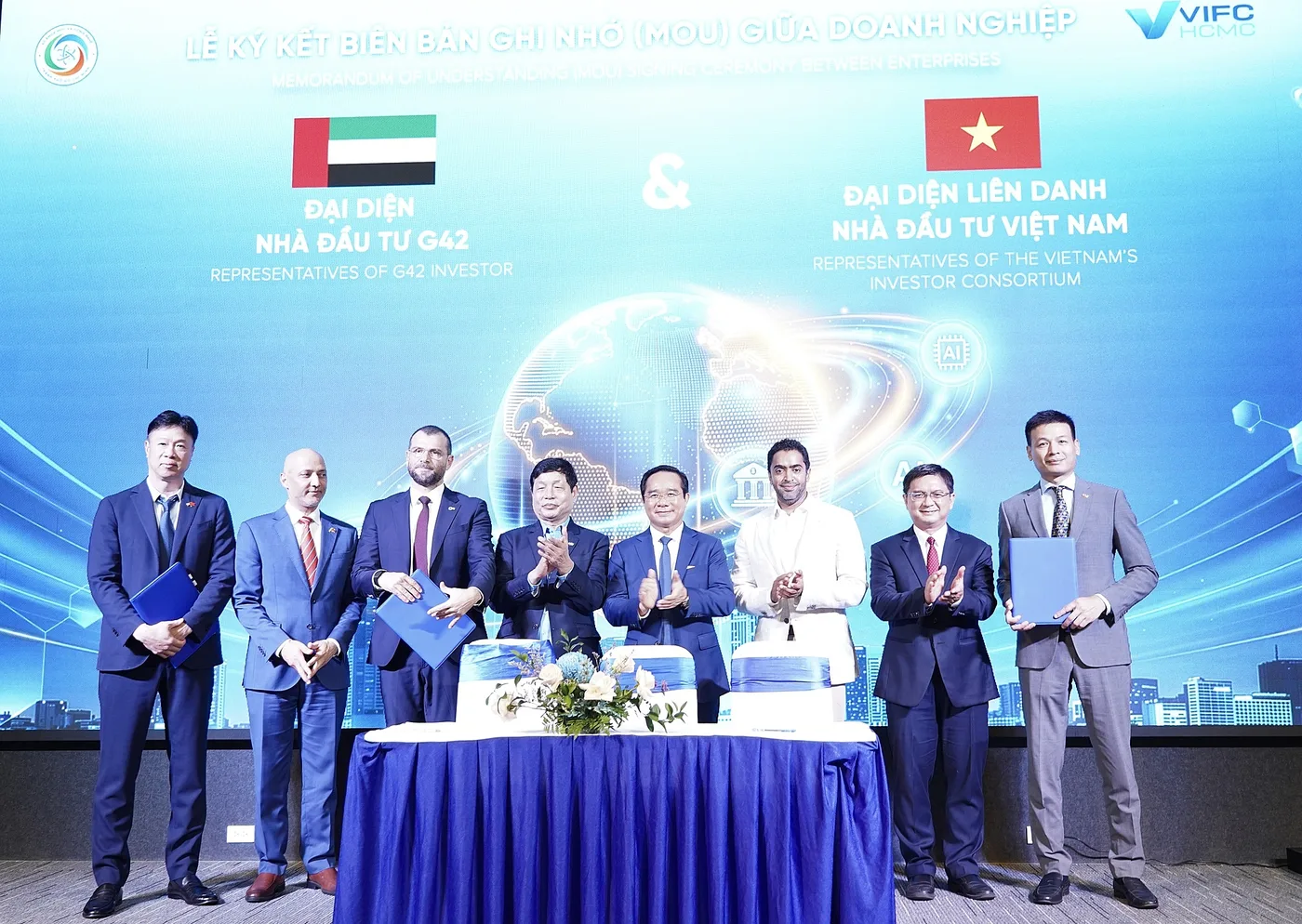
G42 is Abu Dhabi’s AI holding company, owned by the Emirati sovereign fund and Microsoft. On 8 February 2026, it signed a framework agreement with FPT and Viet Thai (the group founded by the man behind Highlands Coffee) for three data centers in Vietnam, backed by “up to one billion dollars” of capacity purchase commitments. This is not an investment: it is a promise to consume. Neither the sites, nor the power, nor the timeline have been published.
The G42 agreement, through the press release and the business press:
- PR Newswire, 8 February 2026: “G42 and Vietnamese consortium commit to build national AI infrastructure and develop Southeast Asia’s intelligence capacity” (in English)
- The Investor, 9 February 2026: “FPT partners with Abu Dhabi-based G42 to develop hyperscale data centers in Vietnam” (in English)
FPT Semiconductor
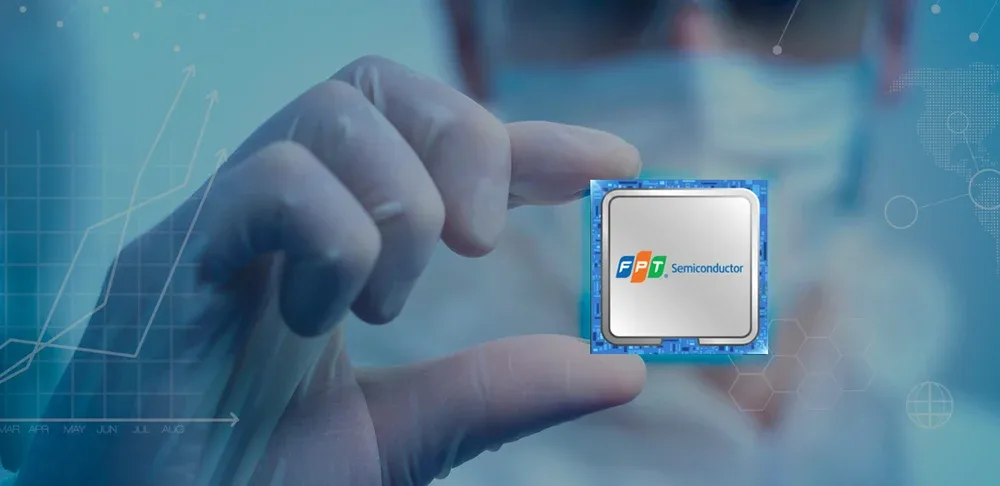
FPT Semiconductor, created in 2022, designs power management and connected device chips without owning a plant, manufacturing them in Taiwan or Korea; FPT talks about 70 million chips ordered. On 28 January 2026, the group announced a testing and packaging plant in Yên Phong, in Bắc Ninh province: 1,600 square meters, six test lines, going live in 2027, registered at VND 50 billion, about $1.9 million. A few hundred meters away, America’s Amkor has invested $1.6 billion. The same day, FPT signed with Viettel, Japanese distributor Restar and VSAP Lab (Đà Nẵng) an alliance for embedded AI chips at 28 to 32 nanometers. Trương Gia Bình: “1 and 2 nanometers will stay in the United States and Japan. But general-purpose chips have to be made in Vietnam.”
To follow FPT into chips:
- PR Newswire, 28 January 2026: “FPT announces the establishment of an advanced semiconductor testing and packaging plant, accelerating the integration of Vietnam’s semiconductor value chain” (in English)
- VnEconomy, 14 August 2026: “Bắc Ninh attracts over $2.7 billion into the semiconductor industry” (in English)
- SGGP, 12 February 2026: “Strategic alliance forms to complete Vietnam’s closed semiconductor ecosystem” (in English)
- Vietnam.vn, 7 August 2025: “With orders of up to 70 million chips, what does FPT’s semiconductor ecosystem actually hold?” (in English)
2. Viettel

Viettel is the army’s group (Tập đoàn Công nghiệp – Viễn thông Quân đội, the military industry and telecoms group), the country’s leading mobile operator, with fourteen data centers and 11,500 racks. Its Viettel AI unit has existed since 2020. It is the player the State entrusts with the most missions: the judges’ assistant since 2022, the “sovereign” model in 2026, the country’s first chip plant. You find it at five layers out of six.

Callbot

Viettel AI was the first to put a callbot in front of real customers, back in 2020. By 2023, the callbot was taking more than 100,000 calls a day for the operator’s own customer service. It is the country’s oldest large-scale AI product, and it serves the group itself first.
Two reads, one official, one from the press:
- Viettel AI, official site (in English)
- VietNamNet, 28 December 2023: “The power of AI technology in Viettel’s customer service” (in Vietnamese, use Google Translate)
Viettel AI Platform and My Agent
Viettel AI sells four platforms to businesses and government bodies: Cyberbot for assistants, a data platform, an AI platform and a digital twin. My Agent, more recent, is the agent platform on which Viettel has been testing its legal model with a thousand users since September 2026. No client figures published.
Viettel AI’s announcement, for those who want the detail:
- Viettel AI, 4 September 2026: “Viettel AI brings its large language model into practice with a legal AI product” (in English)
VT-Super, VAI-LLM and VAI-LEGAL
Viettel became the reference player on models in 2026. On 29 May, VT-Super: 120 billion parameters, built on NVIDIA’s open Nemotron 3 Super architecture, then trained in Vietnamese on administrative data, corporate documents and real conversations. On 27 July, VAI-LLM, co-developed with NVIDIA. On 6 August, first place on the VMLU leaderboard for fine-tuned models, at 90 out of 100. On 4 September, VAI-LEGAL, a legal model being tested with a thousand users. The word “sovereign” is in the headline of the press release; the base is American, and Viettel says so.
Viettel’s press releases, and the leaderboard itself:
- Viettel AI, 29 May 2026: “Viettel trains 120-billion-parameter Vietnamese sovereign AI model” (in English)
- Viettel AI, 27 July 2026: “Viettel AI records its first results in its cooperation with NVIDIA” (in English)
- VMLU leaderboard (in English)
Hòa Lạc 2, Tân Phú Trung and An Khánh
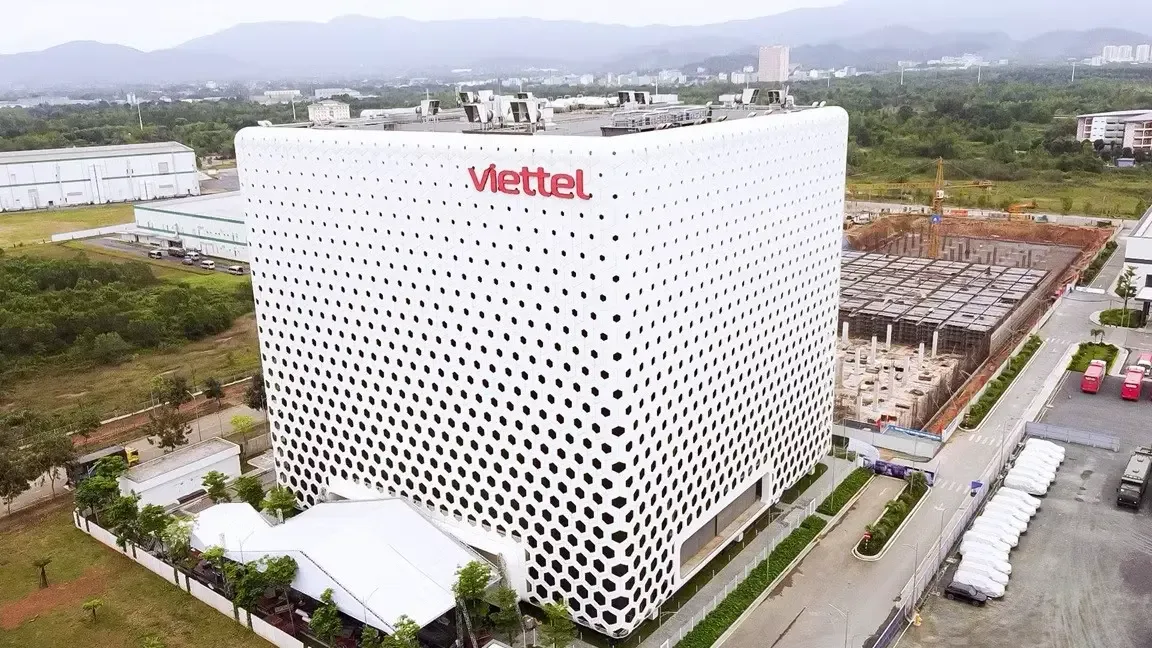
The center that matters for AI is Hòa Lạc 2, west of Hanoi, opened in 2024: 30 megawatts, more than a hundred clusters of H200 cards and an NVIDIA DGX B200 supercomputer, certified Tier III in June 2026 with the GPUs running, a first in Asia-Pacific according to Viettel. Two more sites follow: Tân Phú Trung, in Củ Chi north of Ho Chi Minh City, 140 megawatts and 10,000 racks, ground broken in April 2025; An Khánh, west of Hanoi, 60 megawatts, August 2025, part of a “one billion dollar” complex with a research center. No open source confirms that the first phases have gone live as I write.
Viettel’s announcements, site by site:
- VietnamPlus, 5 June 2026: “Vietnam has Asia-Pacific’s first AI data center certified Uptime Tier III” (in Vietnamese, use Google Translate)
- Tuổi Trẻ, 23 April 2025: “Viettel breaks ground on a top 10 Southeast Asian data center in Ho Chi Minh City” (in Vietnamese, use Google Translate)
- VietnamPlus in French, 29 April 2025: “Viettel builds the largest data center in Vietnam” (in French)
- VnExpress, 18 August 2025: “Viettel invests one billion dollars in two technology centers” (in Vietnamese, use Google Translate)
The 32 nm chip fab
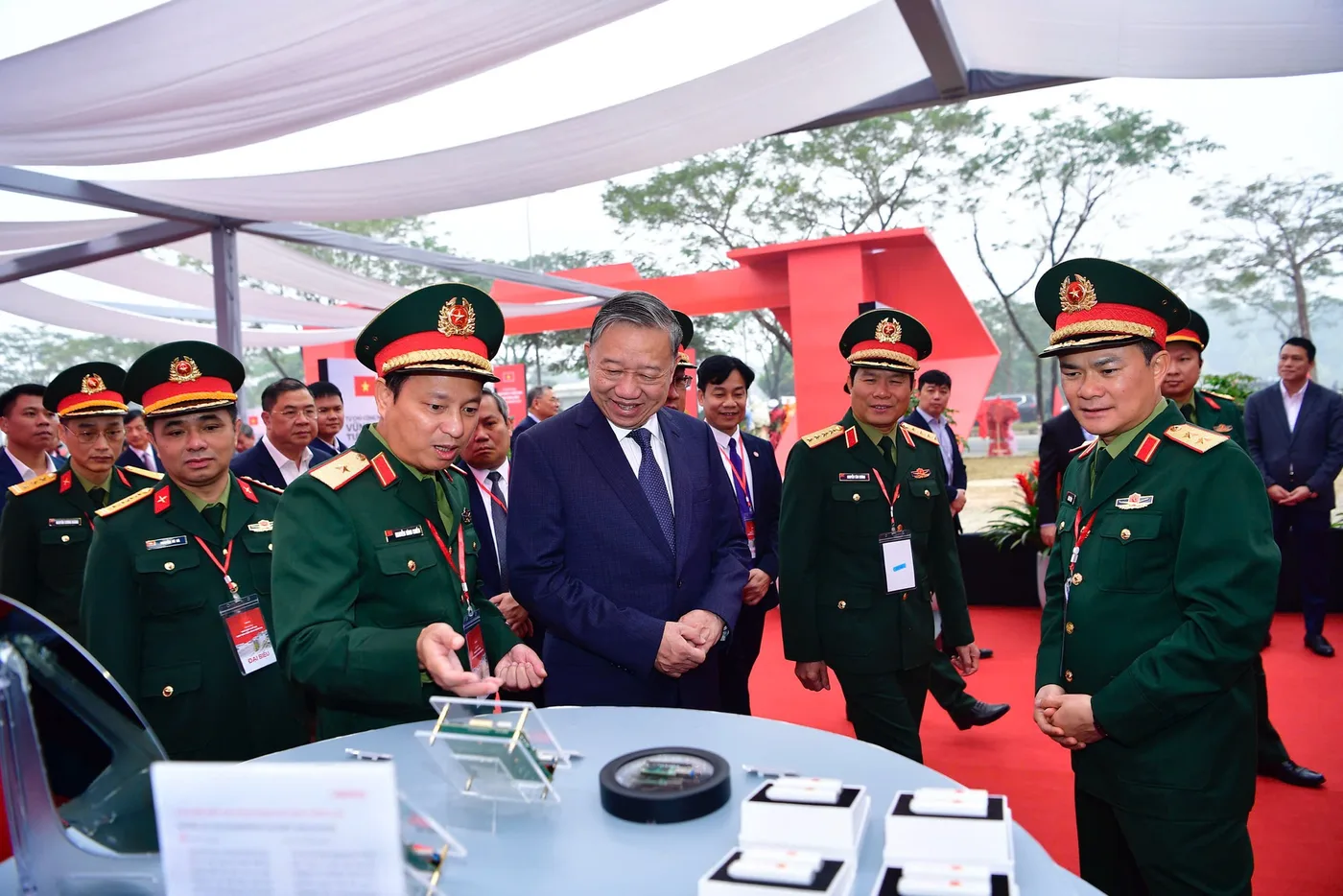
On 16 January 2026, Viettel broke ground on the country’s first chip fabrication plant, across 27 hectares at Hòa Lạc, in front of the General Secretary of the Party and the Prime Minister. This is a State mission handed to the army’s group. The node chosen is 32 nanometers, a technology the world was using fifteen years ago, but one that does not require the most sensitive lithography machines and still covers a good share of demand in telecoms, connected devices, automotive and defense. It will not make AI chips. Pilot production is targeted for the end of 2027. The cost quoted by the business press, $1.3 billion, is not confirmed by Viettel. No technology partner is named; a Viettel general put it himself: “nobody transfers chip technology to you”.
The groundbreaking was widely covered; here are the articles I used, including one in French:
- Government portal, 16 January 2026: “The General Secretary and the Prime Minister at the groundbreaking of Vietnam’s first chip plant” (in Vietnamese, use Google Translate)
- The Investor, 16 January 2026: “Viettel commences work on Vietnam’s first chip fab, eyes trial run by end-2027” (in English)
- VietnamBiz, 19 January 2026: “Viettel’s chip plant: why choose 32 nm when the world is racing toward 1 nm?” (in Vietnamese, use Google Translate)
- Le Courrier du Vietnam, 31 January 2026: “FPT teams up with Viettel and several partners to develop the semiconductor industry” (in French)
3. VNG and Zalo


VNG, originally Vinagame, is Vietnam’s first tech “unicorn”, based in Ho Chi Minh City. It publishes Zalo, the country’s messaging app, with close to 80 million users, and it is the Zalo AI team that carries its models and the VMLU benchmark. Two other pieces belong to it: GreenNode, its GPU cloud, and STT VNG, its data centers in a joint venture. VNG is the only private group in this report that has trained a large model from scratch, and the only one that has put its GPUs outside the country.

Kiki
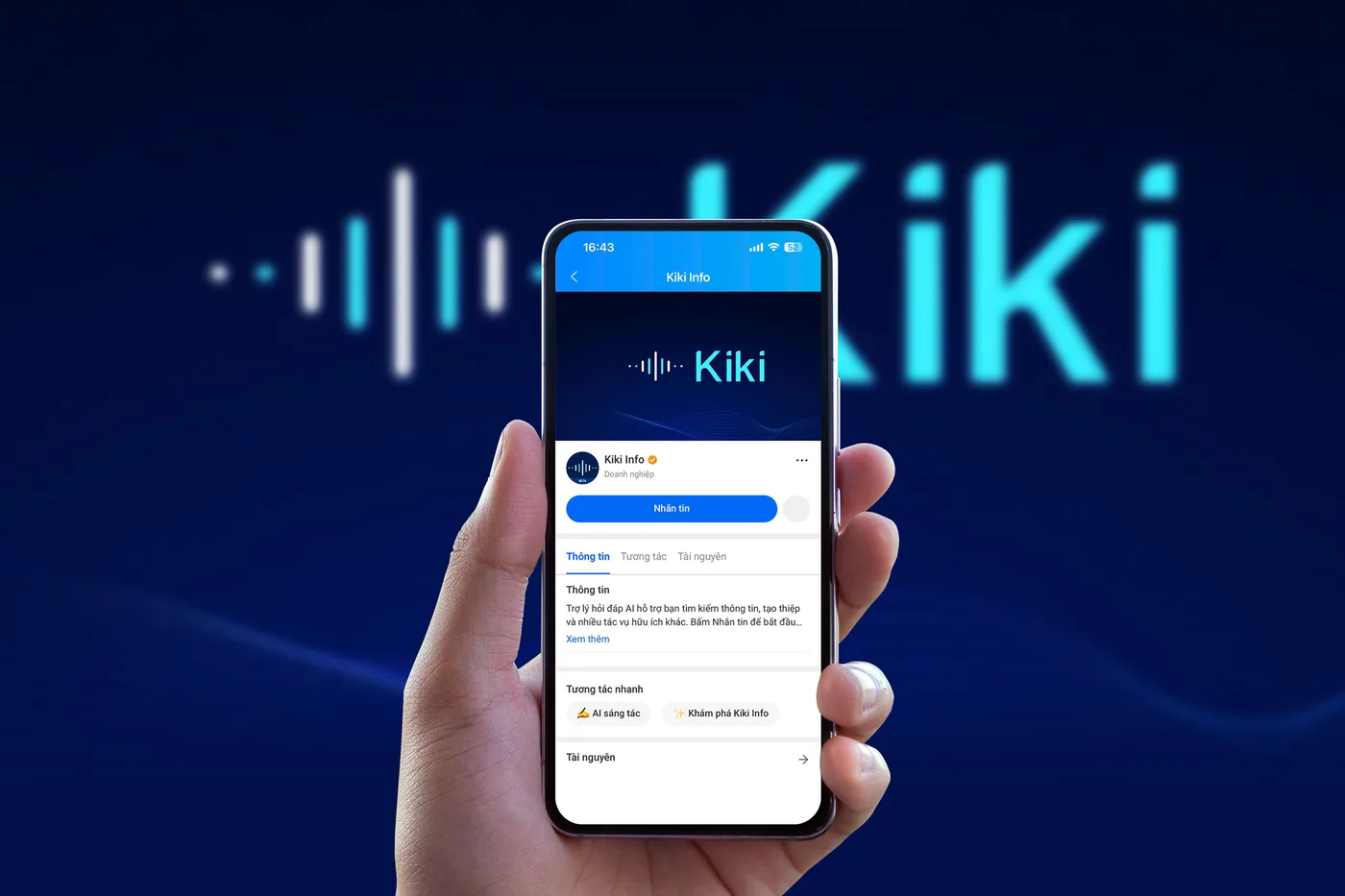
Kiki Info is the conversational assistant built into the Zalo messaging app: one million users a year after launch. Kiki Auto is the voice assistant for the car. At the end of 2025, Zalo said around 30% of its users touch an AI feature every month. The model running behind Kiki Info is never named. Zalo is also where the State has hosted a “digital citizen assistant” since September 2025, with more than 500,000 users in four months.
Here are the articles I found on Kiki and Zalo’s AI:
- Tuổi Trẻ, 13 December 2025: “Zalo democratizes AI, the bright spot of Vietnamese artificial intelligence” (in Vietnamese, use Google Translate)
- VnExpress, 9 March 2026: “A Vietnamese AI platform among the most used in Vietnam” (in Vietnamese, use Google Translate)
- Znews, 16 April 2026: “The new AI features on Zalo” (in Vietnamese, use Google Translate)
KiLM and VMLU
Zalo AI is the only major player that did everything itself: KiLM, 7 billion parameters at the end of 2023, then 13 billion in 2024, trained from scratch on eight NVIDIA DGX H100 servers, in six months instead of the eighteen planned. On VMLU, KiLM 13B scores 66, just ahead of GPT-4. Zalo’s chief technology officer, Nguyễn Minh Tú: “We believe Vietnamese people themselves can master a large model in Vietnamese.” Zalo also built, with Japan’s JAIST institute, the VMLU benchmark everyone else measures themselves against, and maintains it. No new version of KiLM has been submitted since August 2024.
On KiLM, here is what the press and VNG have published:
- VnExpress, 18 June 2025: “Six months to train Zalo AI’s large language model” (in Vietnamese, use Google Translate)
- Dân trí, 25 June 2025: “Zalo’s CTO: ‘Vietnamese people can master a large language model’” (in Vietnamese, use Google Translate)
- VNG, 10 January 2025: “Zalo AI report on large language models” (in English)
GreenNode and GreenMind
GreenNode is VNG’s GPU cloud. In June 2024 it opened a cluster of “thousands of H100s” in Bangkok, with Singapore’s ST Telemedia, rather than in Vietnam. In December 2025, VNG merged its classic cloud (about a thousand clients) and GreenNode under a single AI-focused brand. GreenNode has also published GreenMind, built on Alibaba’s Qwen 2.5, scoring 74 on VMLU: the first Vietnamese model packaged in NVIDIA NIM format, and the only recent Vietnamese model whose weights can be downloaded, under an open license. In the second quarter of 2026, its revenue was down 17%, which VNG explains by the shift toward AI infrastructure.
To follow GreenNode, my reading, and the model card:
- The Investor, 17 December 2025: “Vietnam tech unicorn VNG merges two core units into AI-focused GreenNode brand” (in English)
- GreenNode, June 2024: “GreenNode and NVIDIA unveil Thailand’s first hyperscale GPU cluster, at the STT data center” (in English)
- Lao Động, 4 August 2026: “VNG earns VND 467 billion, GreenNode sees revenue fall” (in Vietnamese, use Google Translate)
- GreenMind on Hugging Face: model card (in English)
STT VNG
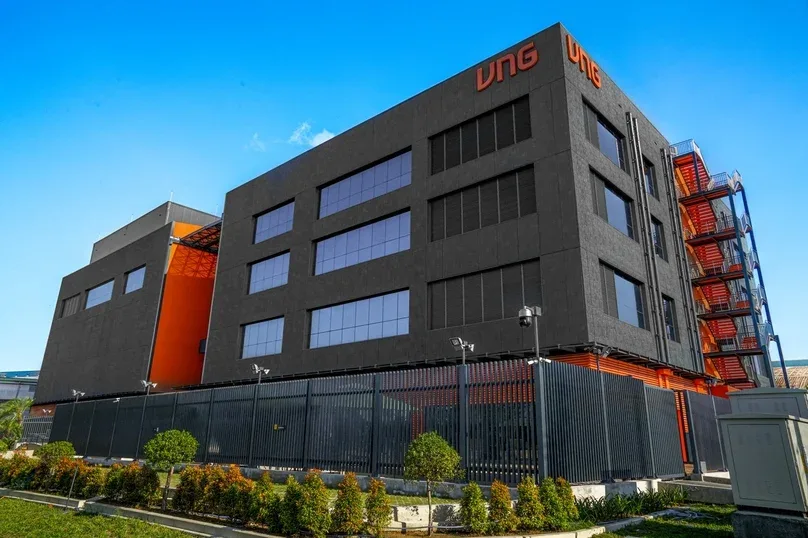
VNG put its Tân Thuận data center, in the south of Ho Chi Minh City, into a joint venture with ST Telemedia Global Data Centres, a Singaporean operator in the Temasek group. The first center, 9.6 megawatts, is live. The second, 60 megawatts a kilometer and a half away, was expected in the first half of 2026; its commissioning is not confirmed.
On the STT VNG joint venture:
- ST Telemedia, 15 May 2024: “ST Telemedia Global Data Centres expands into Vietnam through a joint venture with VNG to build and operate data centres” (in English)
- Data Center Dynamics, May 2024: “STT GDC expands into Vietnam, plans 60 MW facility in Ho Chi Minh City” (in English)
4. Vingroup

Vingroup is the country’s largest private conglomerate: real estate with Vinhomes, cars with VinFast, hospitals with Vinmec. It created three AI teams, earlier than anyone else: VinAI in 2019, the research lab; VinBrain in 2019, medical imaging; VinBigdata in 2021, data, voice and models. Five years later, two of the three are American: VinBrain was bought by NVIDIA at the end of 2024, and VinAI’s generative AI arm by Qualcomm in 2025. What remains is VinBigdata, which mostly equips the group’s own products.

ViVi
ViVi is the voice assistant built into VinFast cars since 2021. It is developed by VinBigdata, which claims 98% recognition on standard Vietnamese vocabulary, and more than 30,000 hours of recorded speech. The assistant went to the Philippines with the cars in 2025.
What I read on ViVi:
- Thanh Niên, 26 December 2022: “VinBigData launches VinBase, its multi-perception AI platform” (in Vietnamese, use Google Translate)
- VinFast community: “Trợ lý ảo ViVi, công nghệ kết nối yêu thương”, the ViVi assistant, the technology that connects hearts (the ViVi mascot used in the visuals of this report comes from this page; in Vietnamese)
VinBase 2.0 and ViGPT

VinBase is VinBigdata’s enterprise platform: chatbots, callbots, speech recognition and synthesis, biometrics. Version 2.0, at the end of 2023, added ViGPT, presented as the first “Vietnamese version of ChatGPT” trained from scratch, on 600 gigabytes of Vietnamese text; VMLU score of 42, and no new version since. Clients named: VinFast and Vinhomes (the group itself), and the bank ACB. No product news since 2024, and VinBigdata’s website was not responding at the time of my research.
One single source on VinBase and ViGPT, already old, plus the leaderboard:
- SGGP, 27 December 2023: “VinBigdata launches ViGPT, the first Vietnamese version for consumers” (in Vietnamese, use Google Translate)
- VMLU leaderboard, ViGPT-1.6B row (in English)
VinAI and PhoGPT
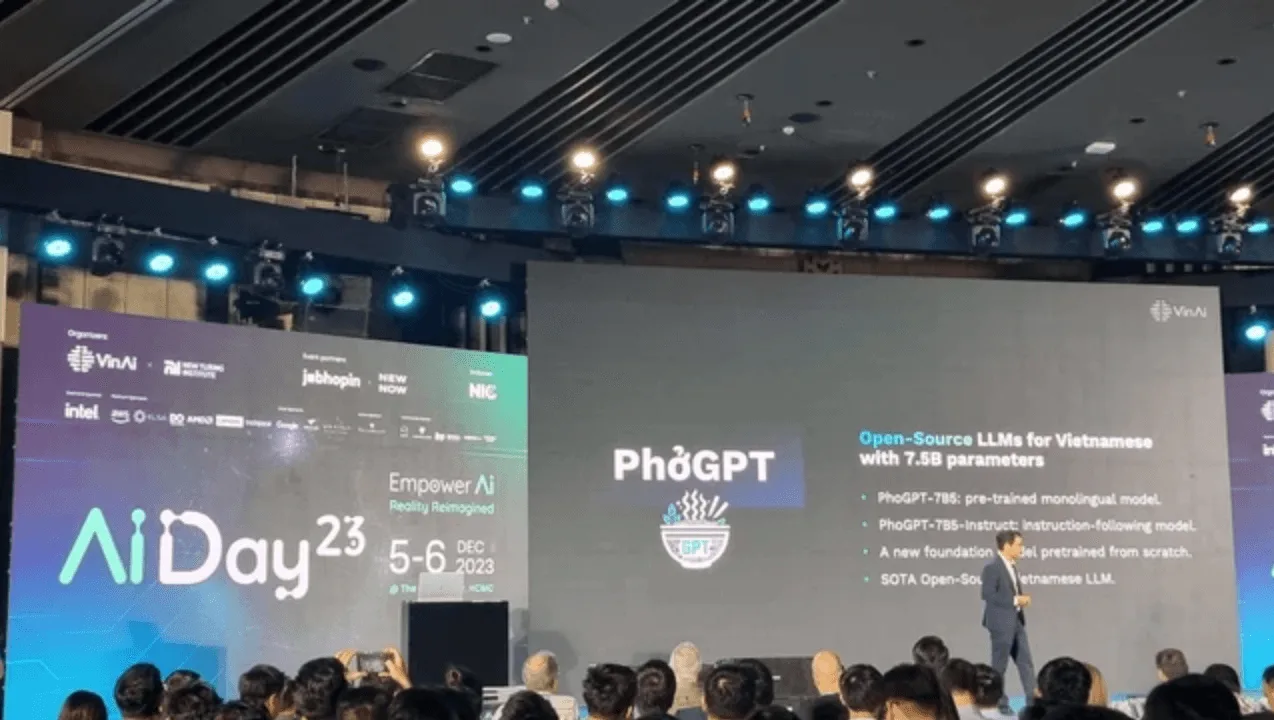
VinAI, the lab founded in 2019 by Bùi Hải Hưng, formerly of Google DeepMind, had published PhoGPT in November 2023: 3.7 billion parameters, trained from scratch, open weights. In April 2025, Qualcomm bought 65% of MovianAI, VinAI’s generative AI arm, and the founder moved to Qualcomm. So the country’s most respected lab became American.
What I found on PhoGPT and the Qualcomm acquisition:
- TechCrunch, 1 April 2025: “Qualcomm acquires generative AI division of Vietnamese startup VinAI” (in English)
- VnExpress International, 2 April 2025: “Qualcomm acquires Vingroup’s AI subsidiary Movian AI” (in English)
- PhoGPT on Hugging Face: model card (in English)
VinBrain and DrAid
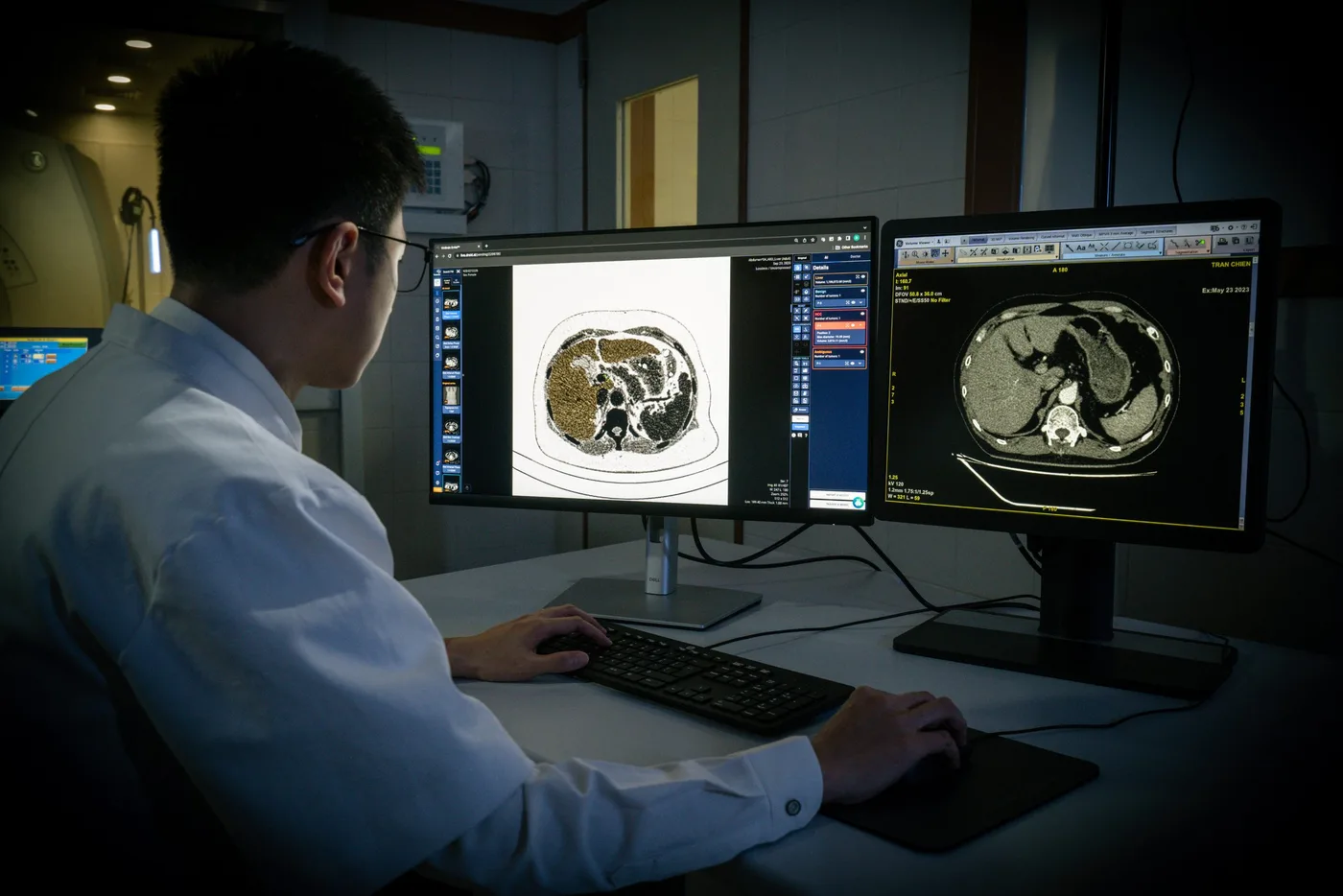
VinBrain was created by Vingroup in 2019. Its DrAid product reads medical images, chest X-rays first of all, and it is installed in 182 hospitals in Vietnam and abroad, with US Food and Drug Administration clearance for pneumothorax detection. In December 2024, NVIDIA bought the company, for an undisclosed amount. Jensen Huang, NVIDIA’s boss, wants to make it “the starting point of a major design center” in Vietnam. This is the first case of a Vietnamese AI team absorbed by an American giant; VinAI was the second.
The story of the acquisition, as told by the English-language press:
- Viet Nam News, 9 December 2024: “NVIDIA acquires Vingroup’s AI healthcare solution company” (in English)
- The Investor, December 2024: “Nvidia acquires AI unit of Vietnamese private giant Vingroup” (in English)
5. VNPT

VNPT (Tập đoàn Bưu chính Viễn thông Việt Nam) is the historic State-owned post and telecoms group, the country’s second operator behind Viettel. Its VNPT AI unit brings together identity, assistants, voice and, since 2025, language models. Its clients are banks and government bodies first, which makes it, along with Viettel, one of the State’s two “trusted” AI suppliers.
eKYC and SmartBot
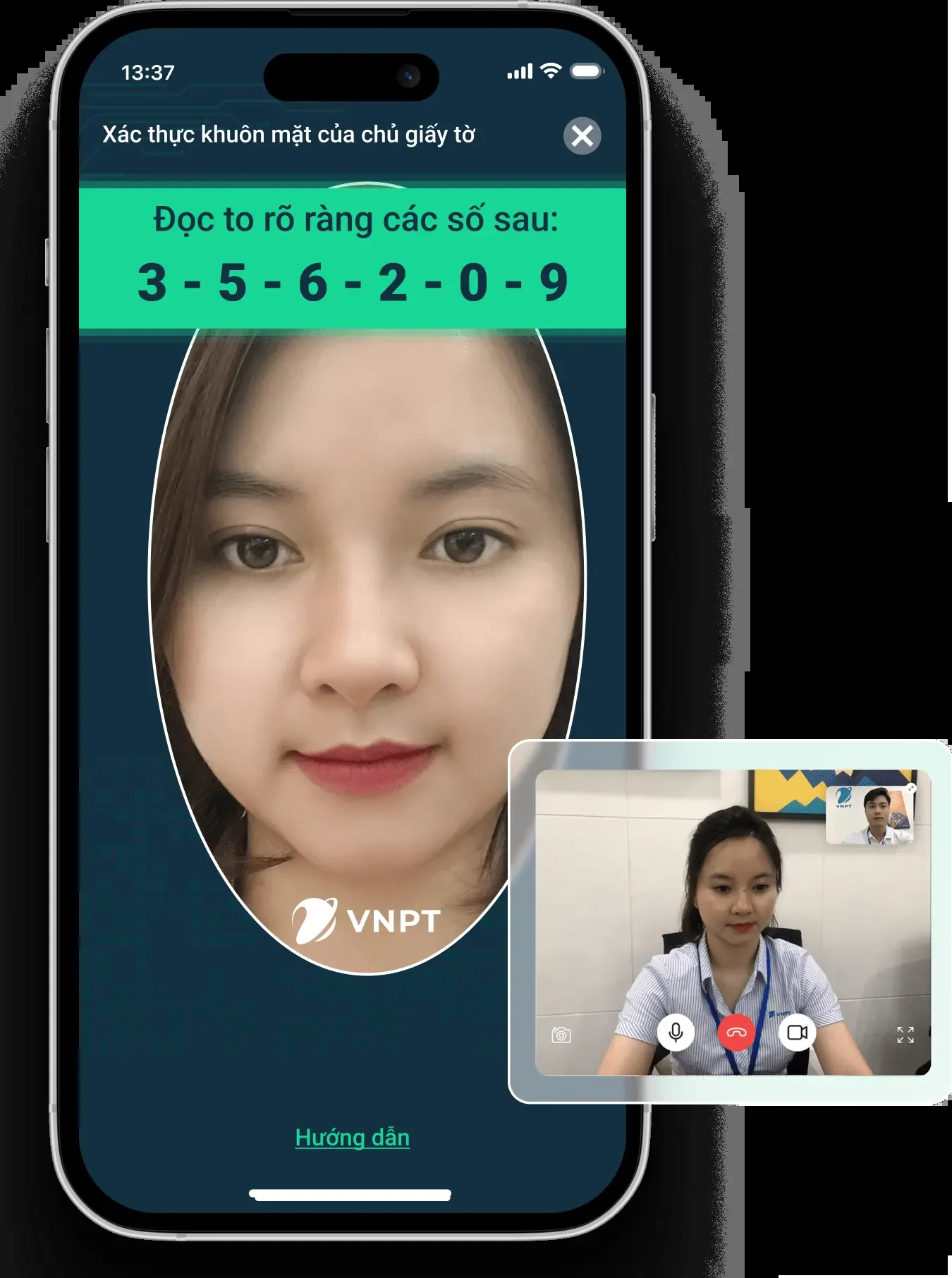
eKYC, for “electronic Know Your Customer”, is remote identity verification, using a photo of the ID card and the face. More than a billion requests since 2024, 600,000 a day, around a hundred banks and operators as clients, 40 million people identified. Its facial recognition engine was in the top 10 of the American NIST ranking in 2023. SmartBot is its chatbot and callbot platform.
To go further, the government portal and VNPT’s own site:
- Government portal, 25 March 2024: “The first AI identification and authentication platform passes one billion requests” (in Vietnamese, use Google Translate)
- VNPT SmartBot, official site: “The AI assistant for customer service and citizens” (in Vietnamese)
VNPT AI
VNPT’s AI unit brings together eKYC, SmartBot, SmartVoice and a knowledge management tool, iKNOW. It advertises “more than 50 public sector clients and 150 partners”. On 8 September 2026, VNPT signed with the Posts and Telecommunications Institute of Technology (PTIT) for an “AI-native” university and an AI tutor for students.
My sources on VNPT AI:
- VNPT AI, official site (in English)
- Nhân Dân, 8 September 2026: “VNPT partners with the Posts and Telecommunications Institute to develop an ‘AI-native’ university” (in Vietnamese, use Google Translate)
VNPTAI.IO
VNPT AI reports models “of several sizes, the largest at several hundred billion parameters”, without publishing the base. Its best VMLU score is 79.6, with VNPTAI.IO Medium: fifth on the leaderboard, and the only one near the top that nobody knows what it is built on.
The leaderboard, so you can check for yourself:
- VMLU leaderboard, VNPTAI.IO-Medium row (in English)
6. CMC

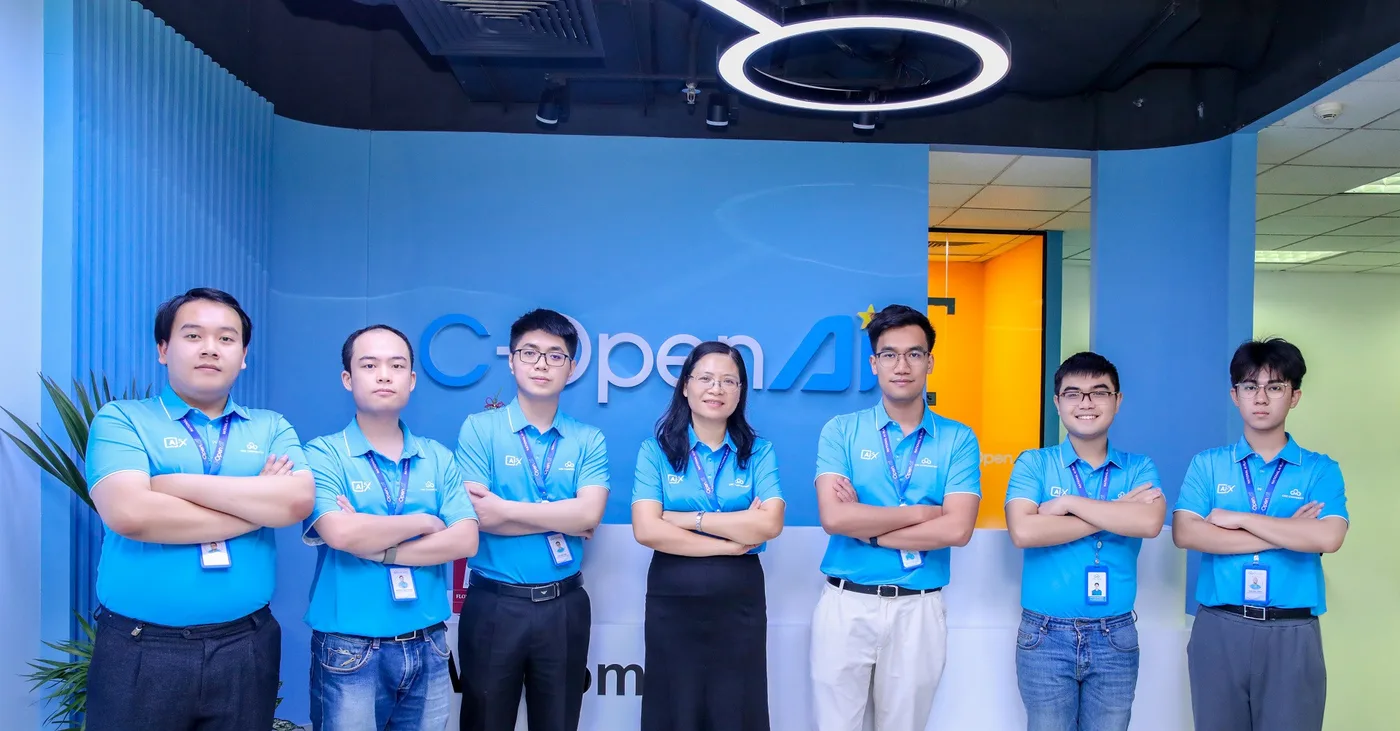
CMC is a Hanoi IT group founded in 1993, listed on the stock market, the second largest private player behind FPT, whose shadow it has long been. Its CMC TS subsidiary does systems integration for government bodies, and it is the one that won the VNeID assistant. In August 2025, the group created a dedicated AI company, CMC OpenAI, with a legal model and a giant data center planned in Ho Chi Minh City. It is the player with the most to prove, and the one that speaks loudest.
The VNeID assistant
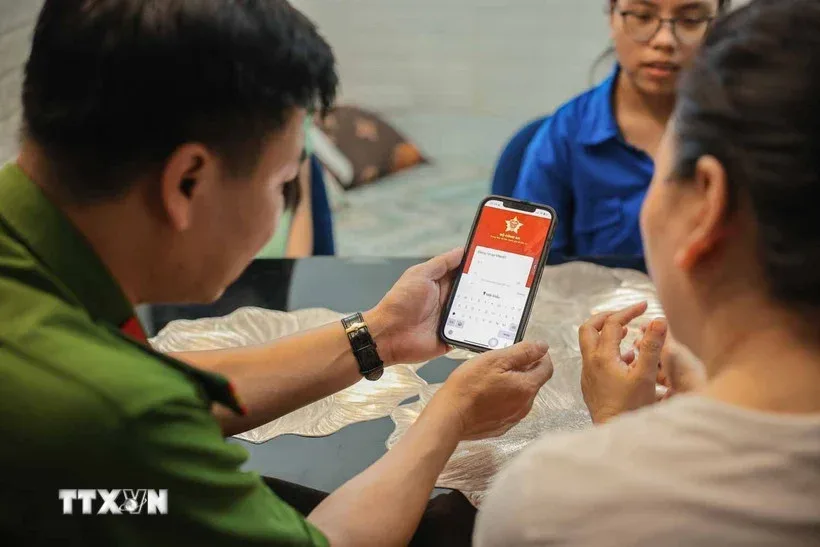
VNeID is the national digital identity app, the one that replaces the ID card, the driving license and the health insurance card on the phone. Since 18 July 2025, it has contained an assistant that answers questions about administrative procedures. It was built by CMC TS with department C06 of the police, which handles civil registration. It knows 1,200 public services and the 28 legal texts that reorganized communes and provinces in 2025. Close to 100,000 questions in the first week, according to the police. The underlying model is not named.
To learn more, the Hanoi press covered it from launch:
- Nhân Dân, 18 July 2025: “Virtual assistant integrated into VNeID” (in Vietnamese, use Google Translate)
- Hà Nội Mới, 20 July 2025: “The public services virtual assistant integrated into VNeID” (in Vietnamese, use Google Translate)
CMC OpenAI
On 21 August 2025, CMC created a dedicated company, CMC OpenAI, in the presence of the Minister of Science and Technology. It brings together 25 in-house building blocks (vision, language, voice, data lake) and runs on the group’s cloud. The stated ambitions for 2028: one billion dollars in revenue, 10,000 people of whom 40% are AI specialists, and a giant $250 million data center in Ho Chi Minh City. Its two visible achievements: the VNeID assistant and the legal model below.
The articles on the birth of CMC OpenAI:
- VietNamNet, 21 August 2025: “CMC unveils CMC OpenAI to shape Vietnam’s AI future” (in English)
- CMC, press release of 21 August 2025: “CMC launches CMC OpenAI, a strategic milestone in Vietnam’s AI journey” (in Vietnamese, use Google Translate)
CMC-AI-Legal
At the end of 2025, CMC OpenAI published a legal model with 32 billion parameters, evaluated on an in-house benchmark, VLegal-Bench: 10,450 questions, 22 tasks. According to CMC, it beats GPT-4o, Claude and Gemini on 6 tasks out of 22. In other words, the American models are still ahead on 16, including on Vietnamese law. The starting model is not specified, and the model is not on VMLU. CMC also has a small document reading model, CATI-VLM, ranked twelfth worldwide in a document reading competition in June 2025.
For those curious about law and models:
- VietNamNet, 26 December 2025: “CMC OpenAI’s step forward in developing a Vietnamese legal AI model” (in Vietnamese, use Google Translate)
- VLegal-Bench: “Vietnamese legal AI benchmark”, the benchmark’s site (in English)
CMC Hyperscale DC

Approved in July 2025 in the Saigon high-tech park: $250 million, 30 megawatts at the start, 120 eventually. In August 2025, CMC signed a memorandum in Seoul with Samsung C&T, the Korean group’s construction arm, for a complex presented as “up to one billion dollars”. Groundbreaking was planned for 2026. Nothing confirms that it has happened.
CMC’s two announcements, the Saigon one and the Seoul one:
- VnExpress, 13 July 2025: “CMC invests in a $250 million data center in Ho Chi Minh City” (in Vietnamese, use Google Translate)
- VietNamNet, 14 August 2025: “CMC, Samsung C&T partner on $1B ‘AI Heart’ data center in HCM City” (in English)
7. MoMo

MoMo (for Mobile Money) is the country’s most used e-wallet, with more than 30 million users, an independent company from Ho Chi Minh City funded by foreign investors. Its team includes 200 AI and data specialists, and every payment goes through six or seven models in parallel. The reported result: 29,000 suspicious transactions blocked per day, around VND 40 billion protected daily. The same models are used to score the creditworthiness of customers with no banking history. The line from its boss, Nguyễn Mạnh Tường, sums up the application layer well: “90% of the value is not in the model, but in how you build the system.”
The figures in this paragraph come from these two articles:
- VnExpress, 29 May 2026: “MoMo uses AI to screen 29,000 abnormal transactions a day” (in Vietnamese, use Google Translate)
- Thanh Niên, 14 January 2026: “Behind MoMo’s ‘double performance’ in 2025” (in Vietnamese, use Google Translate)
8. MISA

MISA is the country’s most widely used accounting and business software publisher, a Hanoi player nobody ever mentions in AI and which nonetheless holds third place on the VMLU leaderboard: MISA-AI, built on Alibaba’s Qwen 3, at 81.3. It is the textbook case of the vertical software publisher fine-tuning an open model on its own data, Vietnamese accounting and tax, to put it inside its products, with no press release and no ambition of “sovereignty”.
The model’s entry on the leaderboard:
- VMLU leaderboard, MISA-AI-1.0 row (in English)
9. The State



Three ministries build things, on top of legislating. The Ministry of Public Security (Bộ Công an) holds identity: VNeID, the assistant hosted at CMC and inside Zalo, and the National Data Center that runs them. The Ministry of Science and Technology (Bộ Khoa học và Công nghệ), which absorbed the Ministry of Information and Communications in March 2025, carries the AI strategy and, since 1 July 2026, the “national artificial intelligence infrastructure”; it opened the chip prototyping center. The Ministry of Finance has the National Innovation Center, which trains people. Alongside them, the Âu Lạc alliance, launched in June 2025 with MobiFone, VNPT, FPT, CMC, Zalo, universities and public agencies, serves as a forum for discussing models.
National Data Center No. 1
Inaugurated on 18 August 2025 at Hòa Lạc, west of Hanoi, by the Ministry of Public Security in the presence of the Prime Minister. Twenty hectares, 1,300 racks, Tier IV certification, the highest reliability level, for VND 16.8 trillion, about $640 million. FPT took part in the design. It is the physical foundation of VNeID and of the State’s databases, and the Prime Minister said it was “only a beginning”.
To learn more about the national center:
- VnExpress, 18 August 2025: “The Ministry of Public Security inaugurates National Data Center No. 1” (in Vietnamese, use Google Translate)
- Dân trí, 18 August 2025: “The Ministry of Public Security inaugurates one of Southeast Asia’s largest national data centers” (in Vietnamese, use Google Translate)
The national prototyping center and the National Innovation Center
On 26 June 2026, the Ministry of Science and Technology opened a “multi-project wafer” center in Hanoi: it groups prototypes from several teams onto a single silicon wafer, manufactured at a foreign foundry, which divides the cost of a trial run. Nineteen partners, including Intel, Infineon, Amkor, Cadence and Synopsys; twelve teams have already requested 30,000 test chips, funded by the State in 2026 and 2027. Upstream, the National Innovation Center, attached to the Ministry of Finance, trains people at Hòa Lạc with the same partners, toward the target of 50,000 engineers.
The official announcements of the prototyping center and the innovation center, two of them in French:
- Government portal, 27 June 2026: “National semiconductor chip prototyping support center makes its debut” (in English)
- VietnamPlus in French, 26 June 2026: “Semiconductors: Hanoi launches a national multi-project wafer center” (in French)
- VietnamPlus in French, 9 December 2025: “Vietnam’s semiconductor industry suffers from a talent shortage” (in French)
10. NVIDIA

NVIDIA is not Vietnamese, but you cannot tell the story of this ecosystem without it: it is the player that shows up at every layer. Every card in every data center comes from them, under American export license; in 2024, FPT waited months for its own. FPT’s AI factory is an NVIDIA partnership. Viettel’s “sovereign” model is built on its Nemotron architecture, with its NeMo and NIM tools underneath most of the platforms. In December 2024, Jensen Huang bought VinBrain and announced a research center in Vietnam; in 2026, the only public trace of it is a local company with one million dollars of capital. NVIDIA puts the Vietnamese installed base at 10,000 to 15,000 GPUs, to be pushed toward 50,000 to 200,000 within five years. And on 21 August 2026, it offered the Ministry of Science and Technology to build “a large model mastered by Vietnam” on Nemotron, with its tools and its data. The other American buyer, Qualcomm, settled for VinAI.
The research center announcement, and the August 2026 offer:
- NVIDIA, 5 December 2024: “NVIDIA to open Vietnam R&D center to bolster AI development” (in English)
- VnEconomy, August 2026: “NVIDIA wants to build with Vietnam a large language model ‘mastered by Vietnam’” (in Vietnamese, use Google Translate)
11. SGI-HCM and Vietnam Data Gen


Two data center projects still on paper, carried by players who have never done AI. Kinh Bắc City, an industrial park developer, and the AIC fund (London and Hong Kong) announce SGI-HCM: $2 billion, 200 megawatts, 100,000 GPUs eventually, in the same Củ Chi area as Viettel; groundbreaking was planned for 30 April 2026, with no confirmation. Create Capital and the startup Haimaker.ai announce Vietnam Data Gen, a 100 megawatt network for one billion dollars, starting with the Đà Nẵng high-tech park.
Two announcements to read with caution, and an overview in French:
- The Investor, 6 November 2025: “Vietnam’s leading industrial park developer KBC joins the data center race with a staggering $2 billion investment” (in English)
- The Investor, 29 December 2025: “Create Capital Vietnam and Haimaker.ai plan a $1 billion AI data center network” (in English)
- VietnamPlus in French, 2026: “The wave of AI and data center investment reaches Vietnam” (in French)
12. The legal framework
In Vietnam, direction comes from the texts, in a precise order: a Party resolution sets the course, government strategies put numbers on it, the National Assembly votes the laws, decrees make them enforceable. To read the codes: QH15 means the fifteenth legislature of the National Assembly, NĐ-CP a government decree, QĐ-TTg a Prime Minister’s decision, NQ/TW a resolution of the Party Central Committee. Everything that comes before in this report flows from a handful of texts, nearly all of them issued between September 2024 and August 2026.
Resolution 57-NQ/TW on the digital breakthrough
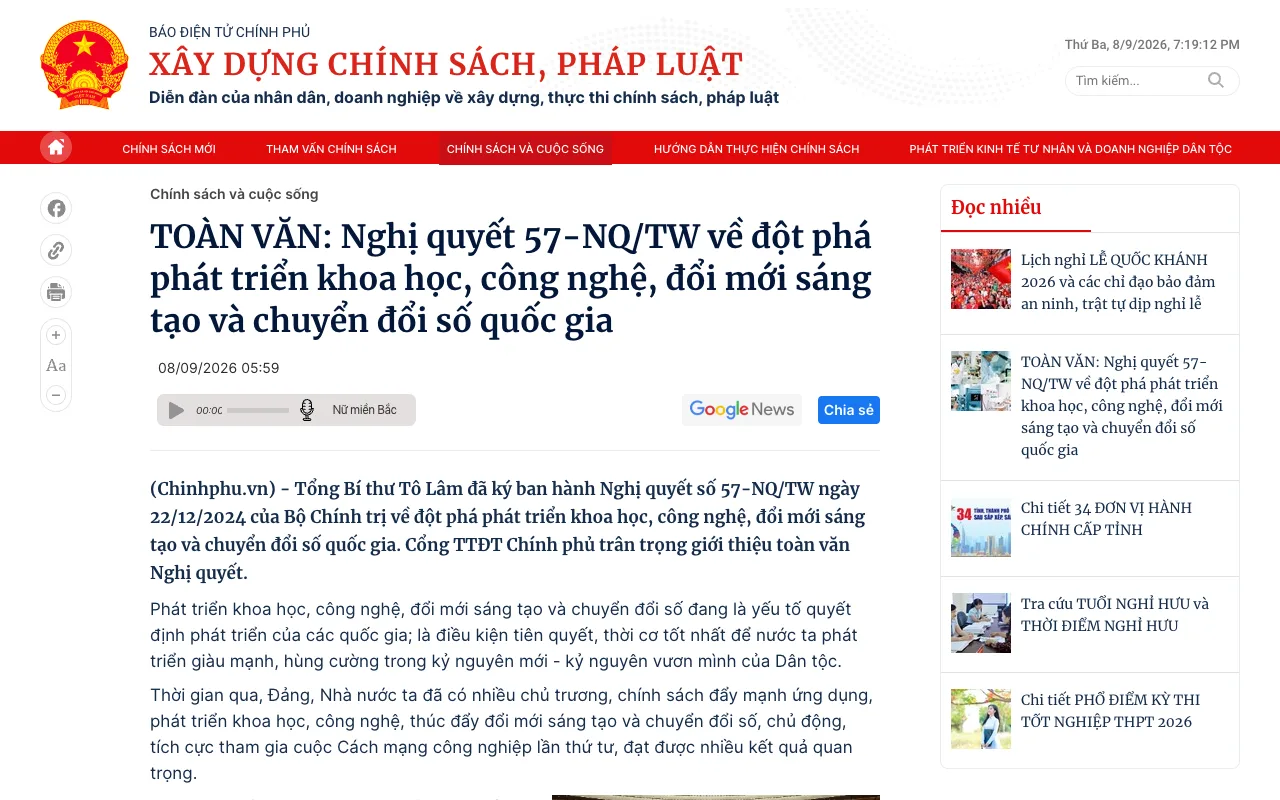
Signed on 22 December 2024 by Tô Lâm, it makes science, technology, innovation and digital transformation “the breakthrough” for the country. Its numbers for 2030: top 3 in Southeast Asia for AI research, digital economy at 30% of GDP, research at 2% of GDP, at least 3% of the State budget, twelve researchers per ten thousand inhabitants, five technology companies of international standing. For 2045, digital economy at 50% of GDP. One clarification, because I got it wrong myself in an earlier video: the phrase about leaving behind the “simple labor, subcontracting, assembly” model is not in the text. It is Tô Lâm’s, at the eighteen-month review of the resolution, on 30 July 2026.
The text, its English translation, and the eighteen-month review:
- Government portal, 24 December 2024: “Full text of the Resolution on breakthroughs in the development of science, technology, innovation and national digital transformation” (in Vietnamese, use Google Translate)
- LuatVietnam: “Resolution No. 57-NQ/TW of 22 December 2024 of the Politburo on breakthroughs in the development of science, technology, innovation and national digital transformation”, English translation
- VietnamPlus, 7 August 2026: “Conclusions of General Secretary Tô Lâm at the meeting of the central steering committee for Resolution 57” (in Vietnamese, use Google Translate)
- Le Courrier du Vietnam, 7 September 2026: “Resolution 57: when policy turns into results” (in French)
Decision 1018/QĐ-TTg on semiconductors
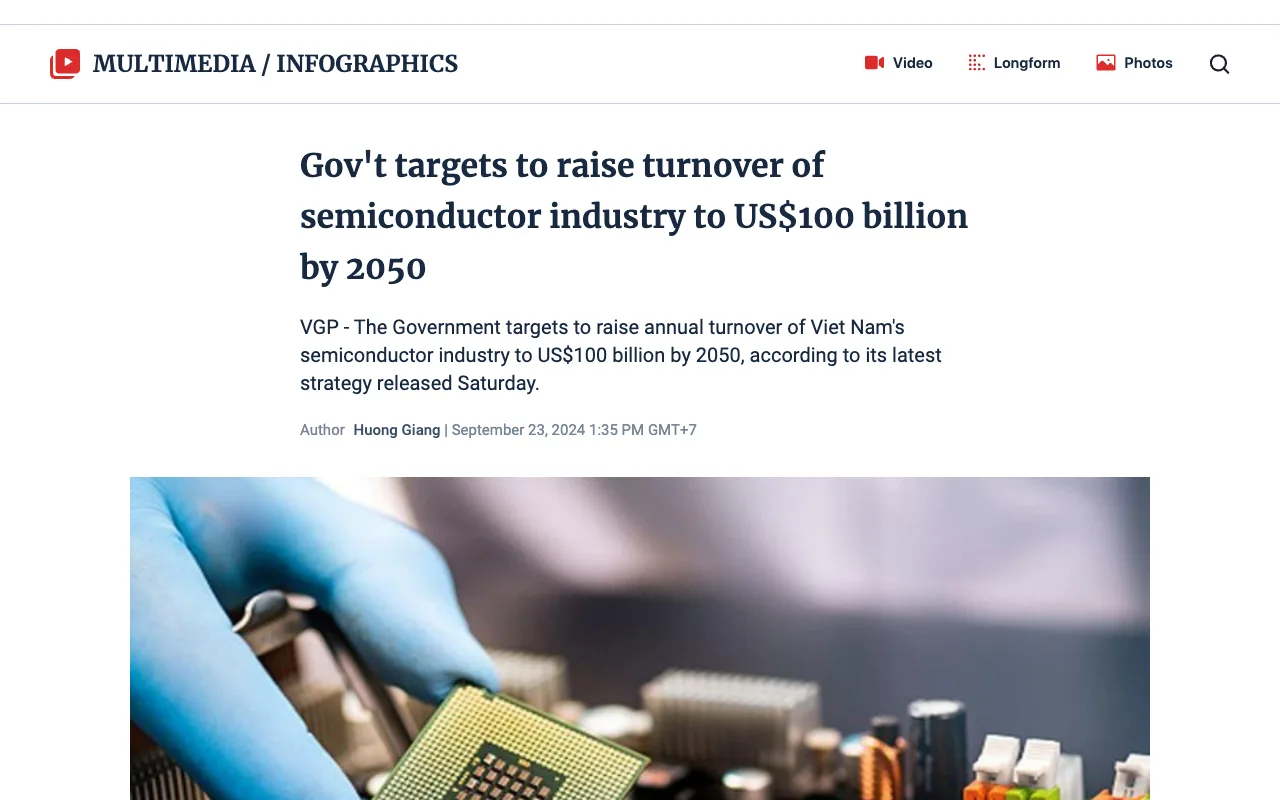
This is the semiconductor strategy, signed on 21 September 2024 by Prime Minister Phạm Minh Chính, with its formula “C = SET + 1”: chip = specialized + electronics + talent, plus Vietnam. Its targets for 2030 are the ones shown on the map, at the chip layer: one fab, 100 design firms, 10 assembly and test plants, more than 50,000 engineers, more than $25 billion in revenue. Then two further steps: 2040, two fabs, 200 design firms, 15 assembly and test plants, 100,000 engineers, $50 billion; 2050, three fabs, 300 design firms, 20 assembly and test plants, $100 billion. Official review in March 2026: around sixty design firms, about 7,000 engineers, 10 of the strategy’s 38 tasks completed. It is the first text in this series, three months before Resolution 57.
The text of the decision, in Vietnamese and in English:
- Government portal, 23 September 2024: “Government targets $100 billion in semiconductor industry revenue by 2050” (in English)
- LuatVietnam: “Decision 1018/QĐ-TTg of 2024, strategy for the development of Vietnam’s semiconductor industry through 2030”, English translation
Law 91/2025/QH15 on personal data protection
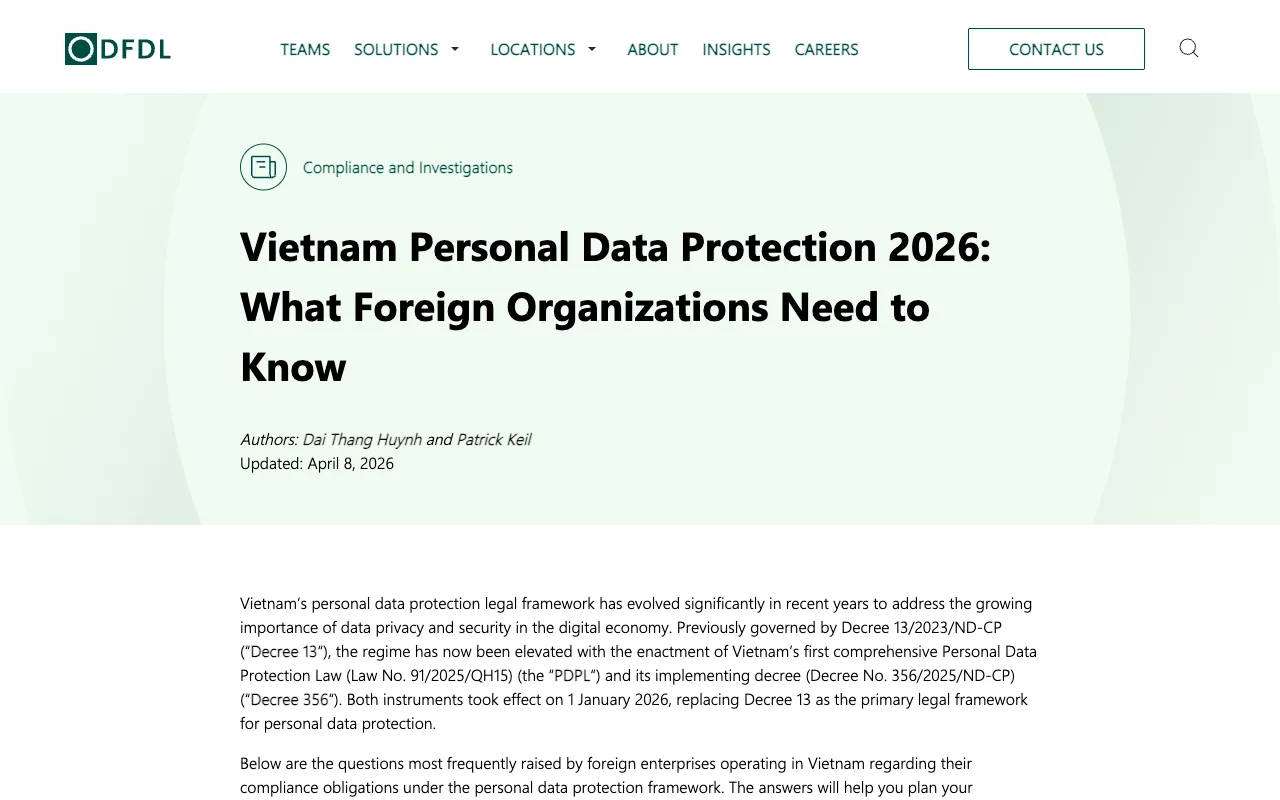
Voted on 26 June 2025, in force since 1 January 2026, with its implementing decree 356/2025 signed the day before, and its penalty decree 330/2026 since 19 August 2026. It is a law inspired by the European regulation, with local differences. The fines are in the law itself: up to 5% of revenue for a non-compliant transfer of data out of the country, up to VND 3 billion (about $115,000) for everything else. Any organization that processes data must file an impact assessment within 60 days with the Ministry of Public Security and appoint a person in charge. Small companies have five years’ grace. Article 30 requires that any processing by AI be classified by risk level. According to DFDL, many Vietnamese companies are still behind on their filings.
To read the law, and what the law firms say about it:
- LuatVietnam: “Law No. 91/2025/QH15 on personal data protection”, English translation (PDF)
- DFDL, 8 April 2026: “Vietnam personal data protection 2026: what foreign organizations need to know” (in English)
- Tilleke & Gibbins, 5 January 2026: “New decree provides guidance for Vietnam’s personal data protection law” (in English)
- Vietnam Briefing, 26 January 2026: “Vietnam’s personal data protection regulation: decree 356” (in English)
Law 134/2025/QH15 on artificial intelligence

Voted on 10 December 2025 by 429 deputies out of 434, in force since 1 March 2026: the first standalone AI law in Southeast Asia, eight chapters, 35 articles. It distinguishes three roles, the developer, the provider and the deployer, and three risk levels, which the provider assesses itself before putting a system into service. Generated content (audio, image, video) must be marked in a machine-readable way. The draft provided for fines up to 2% of revenue; the National Assembly removed them, and the penalty decree is not published yet. Implementing decree 142/2026 (1 May 2026) creates a national AI portal, and decision 33/2026 (15 August 2026) lists 46 high-risk systems across six sectors: education, health, banking, justice, transport, ethnic and religious affairs. Systems already in service have twelve months to comply, eighteen in health, education and finance. The principle stated by the ministry: the law governs uses and outcomes, not research.
The text of the law, and analyses in French and in English:
- LuatVietnam: “Law No. 134/2025/QH15 of 10 December 2025 of the National Assembly on artificial intelligence”, English translation
- Lepetitjournal.com, 5 March 2026: “Vietnam adopts its first law to regulate artificial intelligence” (in French)
- Tilleke & Gibbins, 9 January 2026: “A closer look at Vietnam’s new AI law: what it means for AI businesses” (in English)
- Allen & Gledhill, 19 August 2026: “Vietnam identifies high-risk AI systems across six sectors” (in English)
- MLex, 11 December 2025: “Vietnam passes first AI law, removes revenue-based penalties” (in English)
Law 131/2025/QH15 on intellectual property
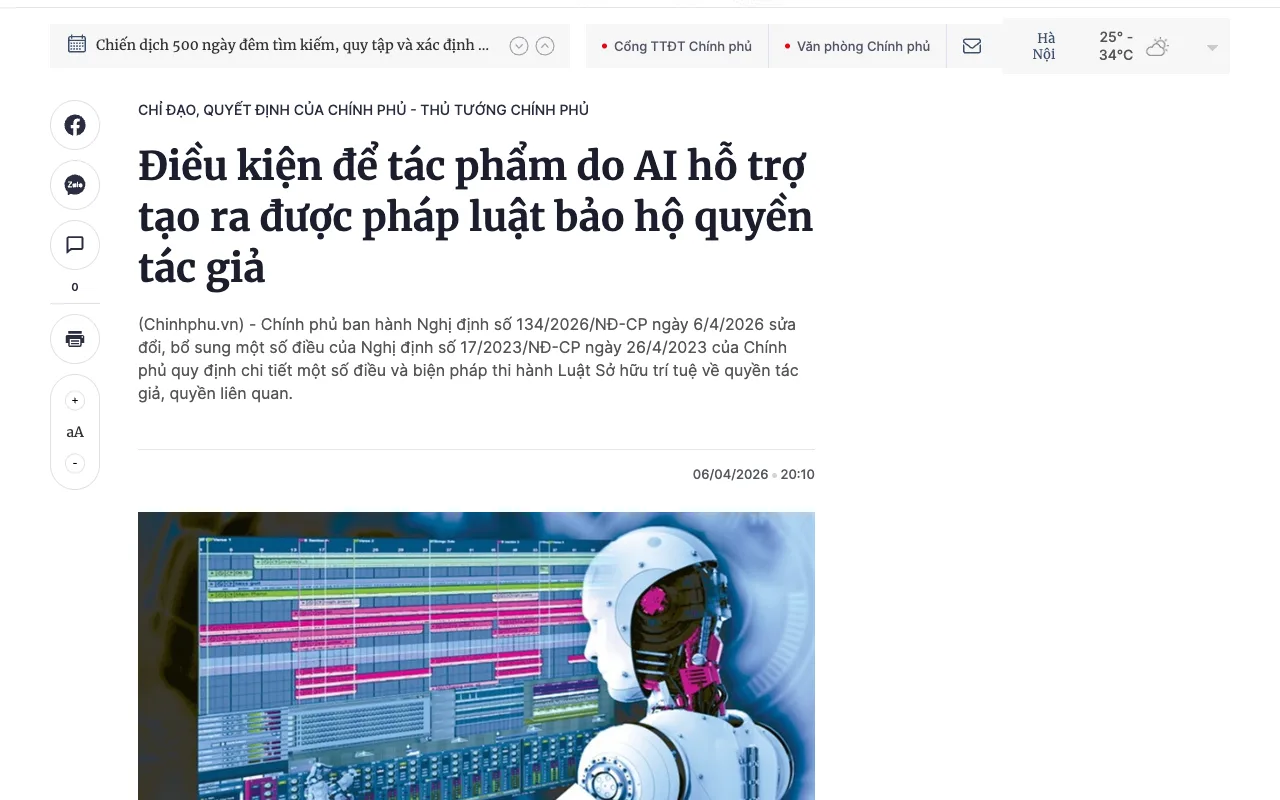
Voted the same day as the AI law, on 10 December 2025, in force since 1 April 2026. It answers the question anyone training a model asks: are you allowed to learn from other people’s texts? Its article 7 says yes: texts and data published lawfully and accessible to the public may be used for research, testing and the training of AI systems, as long as this does not unreasonably harm the authors. Decree 134/2026 (6 April 2026) sets the conditions: non-commercial use, a lawful source with no circumvention of technical protection, the right for authors to opt out through a machine-readable notice or a declaration to a collective management organization, and a return to the ordinary rule, authorization and royalties, as soon as the model is exploited commercially. The same decree settles the other side: a work produced entirely by an AI is not protected; it is protected if a human made a decisive contribution (data, instructions, selection, retouching), and the applicant must honestly declare the use of AI. This is the text that makes possible, on paper, the training corpora of the Vietnamese models covered above, from FPT’s 70B model to Zalo’s KiLM.
The decree explained by the government portal, and three law firm analyses:
- Government portal, 6 April 2026: “The conditions for a work created with the help of AI to be protected by copyright” (in Vietnamese, use Google Translate)
- Viet An Law, 2026: “Vietnam IP law 2025 update: copyright exceptions for AI model training” (in English)
- Baker McKenzie, 2026: “Vietnam clarifies AI authorship, training data and copyright liability: a comparative lens” (in English)
- Rouse, 2026: “Vietnam IP and AI law updates: compliance strategies for AI training and book digitization” (in English)
Decision 826/QĐ-TTg on digital public services
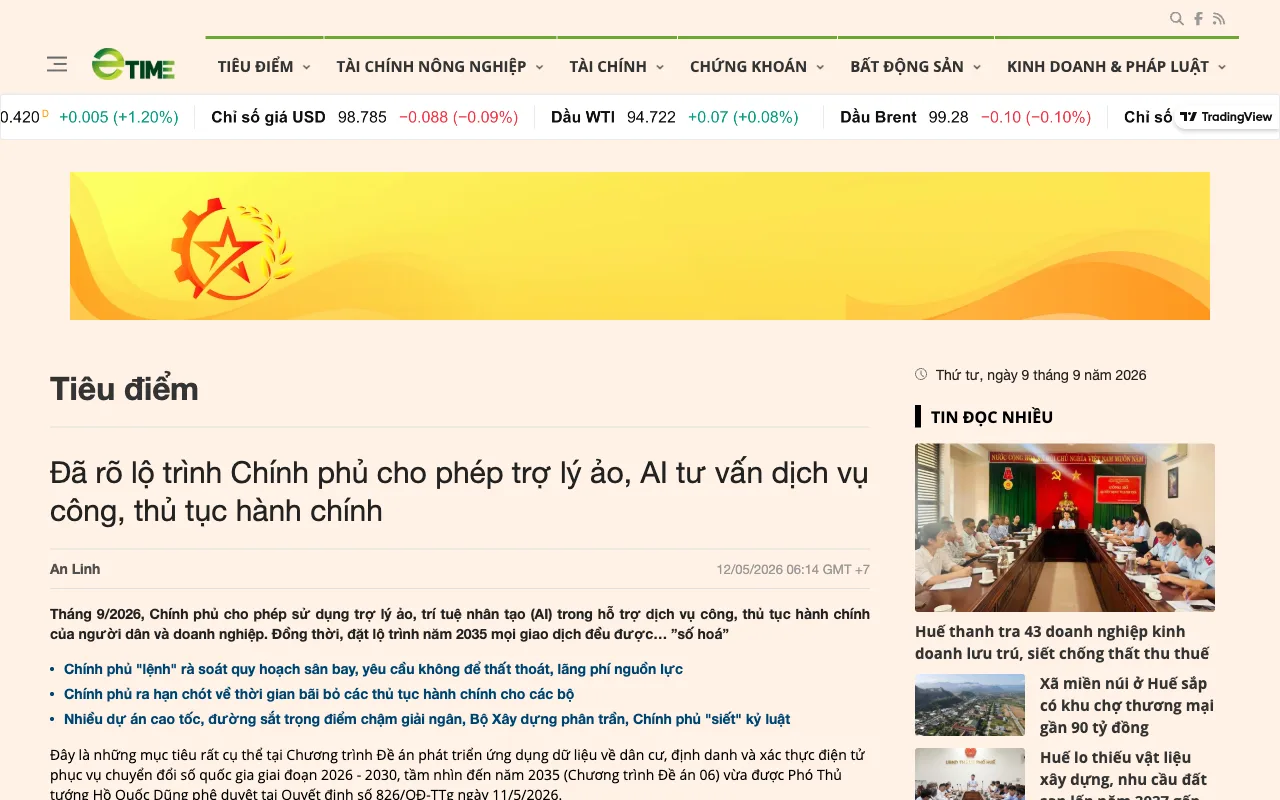
Signed on 11 May 2026, this is the roadmap for digital public services. The Ministry of Public Security must roll out AI assistants for administrative procedures by September 2026; citizen accounts are unified in December 2026; “digital citizen stations” open in January 2027; by 2035, every transaction with the administration happens online. This is the text that explains the VNeID assistant and the one hosted inside Zalo.
The article that sums up the decision:
- Dân Việt, May 2026: “The government’s roadmap for virtual assistants and AI in public services is set” (in Vietnamese, use Google Translate)
Decision 21/2026/QĐ-TTg on strategic technologies
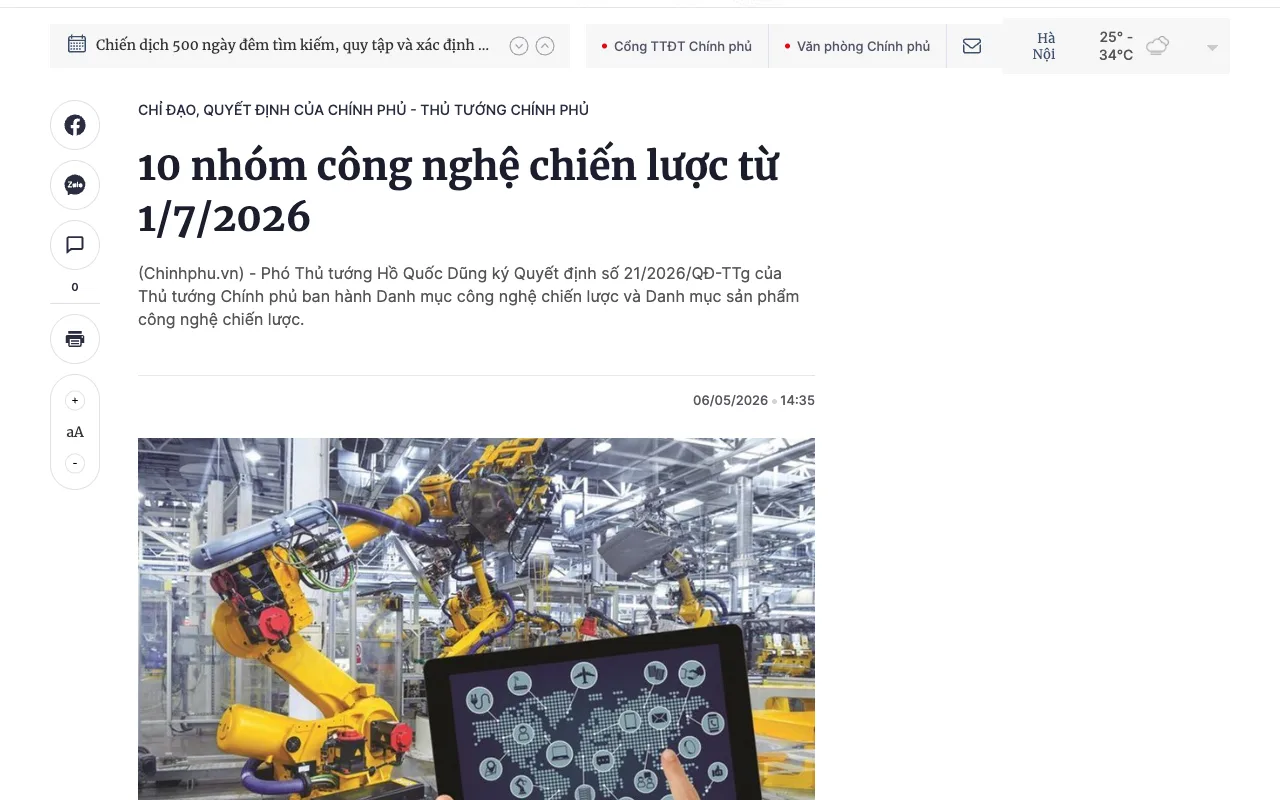
In force since 1 July 2026, this is the national list of strategic technologies and products, in ten groups. In the first one, digital, product number one is “the Vietnamese large language model, virtual assistants and specialized AI”. The text sets no numerical target per product; it says where the State will put its priorities and its support.
The text, published by the government portal:
- Government portal, 6 May 2026: “Ten groups of strategic technologies from 1 July 2026” (in Vietnamese, use Google Translate)
The national AI strategy 2030-2045

Approved on 28 August 2026 by Deputy Prime Minister Hồ Quốc Dũng, it replaces the 2021 strategy. It is where the targets shown on the map, layer by layer, come from: top 3 in Southeast Asia, AI economy at 6% of GDP, $5 billion of exports, 560 exaflops and 500 megawatts, eight Vietnamese-language models, ten brands, 10,000 experts. And one sentence of method: “maintain strategic self-reliance and diversify technology partners”. The ministry that carries it, Science and Technology, absorbed the Ministry of Information and Communications in March 2025; it has been led since April 2026 by Vũ Hải Quân, a computer science professor.
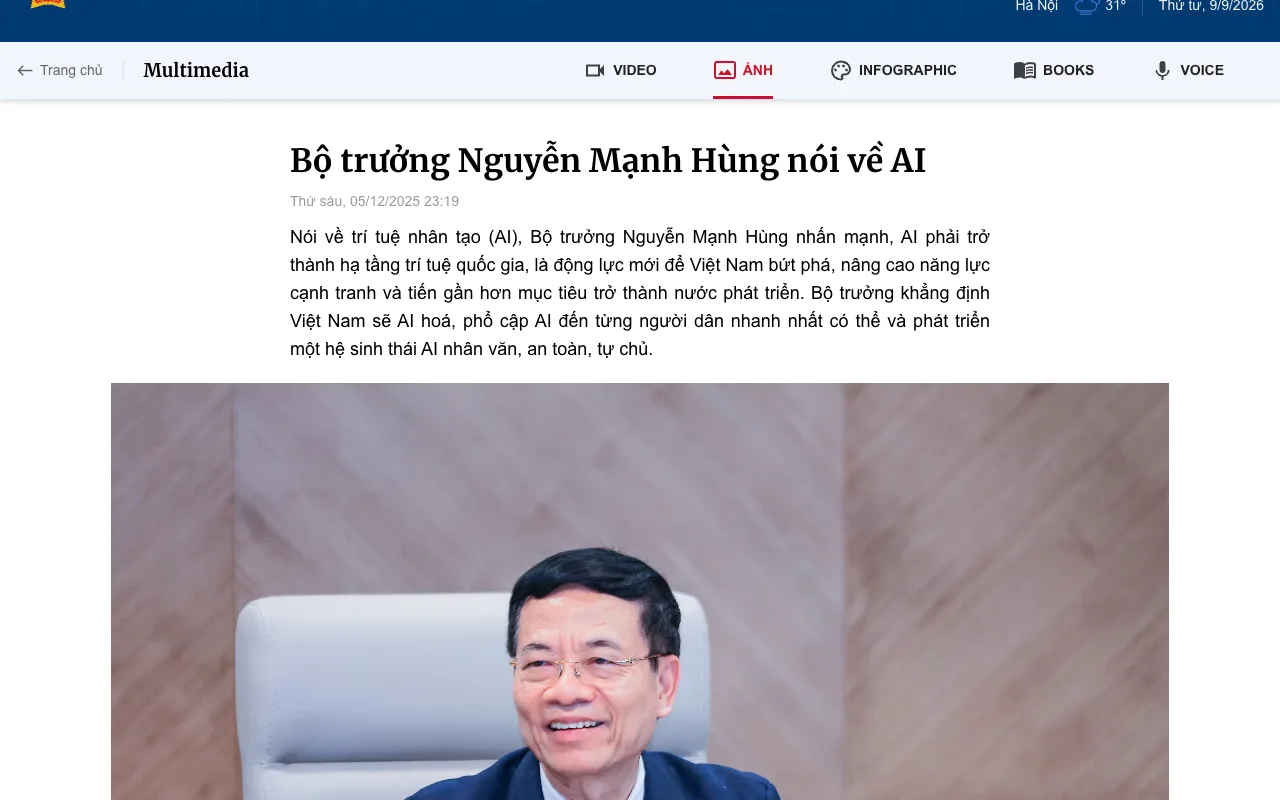
The announcement of the strategy and the minister’s speech on digital sovereignty:
- Government portal, 29 August 2026: “Government approves national AI strategy” (in English)
- Viet Nam News, 7 September 2026: “Viet Nam targets ASEAN AI hub status by 2030” (in English)
- VietnamPlus in French, 6 July 2026: “Vietnam builds a national artificial intelligence ecosystem” (in French)
- Ministry of Science and Technology, 5 December 2025: “Minister Nguyễn Mạnh Hùng speaks about AI” (in Vietnamese, use Google Translate)
Running a tech team in Vietnam?
If you already have a team of developers in Vietnam and managing it takes more of your time than you planned, that is exactly what I do with Offshore Under Control: I take the day-to-day management of your team off your hands, on the ground, in both cultures, so you never have to become a project manager yourself.
Not ready for a call? The free guide, “Succeed with your tech project in Vietnam”, walks through the method step by step.
Leave a Reply